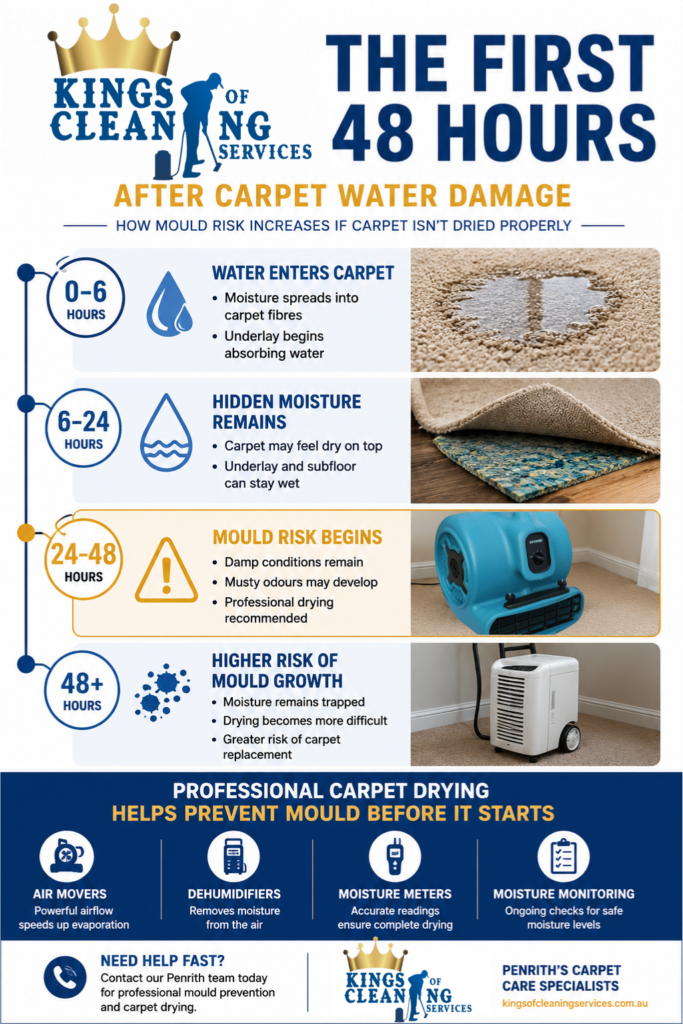
Mould can start growing on damp carpet within 24 to 48 hours of water damage, which is why professional drying matters more than surface mopping. A mould prevention carpet drying service in Penrith uses industrial air movers, dehumidifiers and moisture meters to remove moisture from carpets, underlay and subfloor before mould has a chance to form. Most homes return to safe moisture levels within 2 to 3 days.
Why Mould Forms After Carpet Water Damage
After water damage, many carpets appear dry long before the moisture beneath them has fully evaporated. This hidden moisture is what creates the ideal conditions for mould growth.
Carpet fibres exposed to air may dry relatively quickly, but the underlay beneath them can remain damp for days. Moisture can also spread into the subfloor, skirting boards and nearby wall cavities. Once humidity becomes trapped in these materials, mould spores can begin to develop rapidly.
This is why drying matters just as much as water extraction. The emergency response removes visible water, but the drying stage prevents long-term moisture problems from developing afterwards.
For homeowners dealing with recent flooding, Kings of Cleaning also provides anemergency flooded carpet response in Penrith to assist with immediate water extraction and restoration.
Penrith and the wider Penrith Valley can experience seasonal humidity that slows natural evaporation indoors. During humid periods, carpets often take longer to dry completely, increasing the risk of mould forming beneath the surface.
Homes along the Nepean River corridor and lower-lying parts of Penrith often experience higher humidity levels after storms, which can extend drying times.
Homes that remain closed during wet weather can also trap condensation indoors, particularly in bedrooms and living spaces with limited airflow. This additional moisture in the air slows evaporation further and can extend the drying timeline after leaks or flooding.
How Long Before Mould Starts to Grow?
Mould can begin forming on damp organic materials within 24 to 48 hours under normal indoor conditions. Carpet underlay, dust particles and natural fibres all create environments where mould spores can spread if moisture remains trapped.
Several factors influence how quickly mould develops:
Indoor humidity levels
Poor ventilation
The amount of water absorbed.
The type of carpet and underlay
Whether the subfloor was affected
This short timeframe is why fast drying is critical after leaks, storms or burst pipes. A carpet that still feels slightly damp after two days may already be at risk of hidden mould growth underneath.
For households with asthma or allergy sensitivities, damp carpets can also contribute to respiratory irritation and poor indoor air quality. Maintaining safe moisture levels inside the home helps reduce these risks.
Even small water incidents can create problems if moisture spreads beneath the carpet unnoticed. A slow plumbing leak behind furniture or a minor appliance overflow may not look serious initially, but trapped moisture beneath the carpet can still create ideal conditions for mildew and mould growth.
Mould Prevention Carpet Drying Services in Penrith: The Process
Professional drying involves far more than using household fans or opening windows. Proper drying systems are designed to remove hidden moisture from every layer of the flooring system.
Professional mould prevention carpet drying services in Penrith focus on controlled airflow, humidity reduction and moisture monitoring to restore safe drying conditions as quickly as possible.
Moisture Mapping
Before drying begins, technicians assess how far moisture has spread beneath the carpet. Moisture meters and thermal equipment help identify damp areas within the underlay and subfloor that may not be visible on the surface.
This process provides accurate readings that guide equipment placement and help determine how long drying may take. By identifying hidden moisture early, technicians can target affected areas before mould growth has a chance to develop.
Industrial Air Movement
Industrial air movers create high-velocity airflow across the carpet surface to accelerate evaporation.
These systems move significantly more air than household pedestal fans and are designed specifically for structural drying applications. High airflow helps prevent moisture from becoming trapped in carpet fibres and underlay.
Air movers are strategically positioned throughout affected rooms to maximise circulation and shorten drying times.
Professional air movers can move more air than standard home fans dramatically, allowing carpets and underlay to dry faster during the critical 24–48 hour mould risk period.
Dehumidification
As moisture evaporates into the air, industrial dehumidifiers remove it from the room.
Without dehumidification, moisture can simply circulate throughout the property, slowing the overall drying process. This is particularly important during humid weather conditions in Penrith, where natural evaporation is less effective.
Controlling indoor humidity also helps reduce condensation and lowers the risk of mildew forming during the drying period.
Drying equipment is usually left operating continuously for one to three days, depending on how much water was absorbed and the surrounding weather conditions.
Antimicrobial Treatment
In some situations, antimicrobial treatments may also be recommended after water damage.
These treatments help inhibit mould and bacterial growth while the affected areas continue drying. They are commonly used when carpets have remained damp for extended periods or where there is an increased risk of spore activity.
Antimicrobial applications are designed to support moisture control, not replace proper drying procedures.
Final Moisture Reading
One of the most important parts of professional drying is confirming that the carpet is actually dry before the equipment is removed.
A carpet may feel dry on top while the underlay beneath remains saturated. Moisture meters provide numerical readings that confirm whether moisture levels have returned to safe conditions.
This final testing stage helps reduce the risk of hidden mould growth developing after the visible surface appears dry.
Professional drying technicians rely on measurable readings rather than solely on visual appearance. This helps ensure the carpet, underlay and surrounding materials have all dried properly before the job is completed.
Signs Your Carpet Wasn’t Dried Properly
Improper drying is one of the main reasons mould problems develop after water damage.
Some warning signs may appear immediately, while others become noticeable days or weeks later.
Common indicators include:
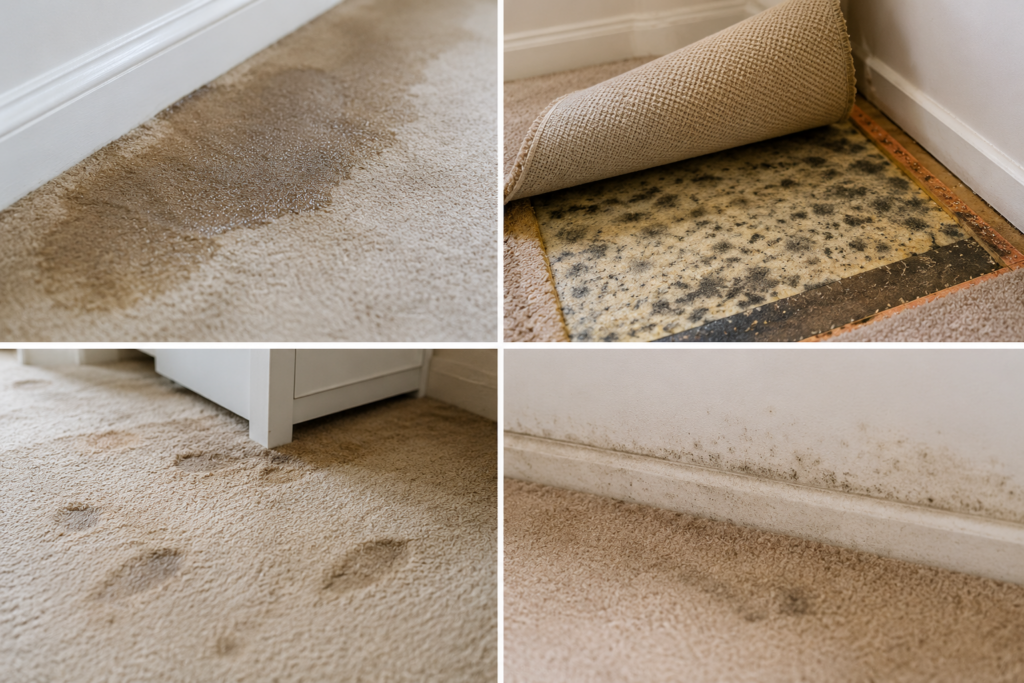
A musty or damp odour
Carpet that feels cool or slightly damp
Increased indoor humidity
Allergy or asthma flare-ups indoors
Discolouration near skirting boards
Persistent damp smells after cleaning
Dark spotting beneath furniture
If these signs appear after water damage, moisture may still be trapped underneath the carpet or inside the underlay.
Early action usually gives the best chance of preventing more extensive mould issues from developing.
If you’re unsure whether moisture is still trapped beneath your carpet, contact our Penrith team to arrange professional moisture testing before mould has a chance to develop.
Why Household Fans and Vacuums Aren’t Enough
Many homeowners try to dry carpets themselves using household fans, towels or wet vacuums. While these methods may help remove surface moisture, they rarely dry the deeper layers underneath.
Household fans are designed for comfort airflow rather than structural drying. They typically cannot move enough air to effectively dry saturated underlay or subfloor materials.
Professional drying systems work differently because they combine:
High-volume air movement
Industrial dehumidification
Moisture monitoring
Controlled drying placement
Continuous humidity management
This combination removes moisture faster and helps reduce the risk of mould growth during the critical 24–48 hour window.
DIY drying can also create a false sense of security. The carpet surface may no longer feel wet, but hidden moisture can remain trapped underneath for days. Without professional moisture readings, there is no accurate way to confirm whether the carpet has actually dried to safe levels.
For larger leaks or flooding, a professionalflooded carpet cleaning service is often the safest way to prevent ongoing moisture damage.
When to Call a Professional in Penrith
Professional drying is recommended whenever:
Water has soaked through the carpet.
The underlay feels damp.
Water remained for several hours.
Multiple rooms were affected.
There is a strong, damp smell.
DIY drying has not worked
Humidity levels remain high indoors.
The sooner professional drying begins, the better the chance of preventing mould growth and saving the carpet from replacement.
Properties in Penrith, St Marys, Glenmore Park and Cranebrook may also experience slower drying times during humid weather, making professional moisture control even more important.
Many property owners also arrange ongoingcarpet cleaning in Penrith after water damage restoration to maintain healthier indoor conditions and improve carpet longevity.
Frequently Asked Questions About Wet Carpet Drying
Can You Save a Wet Carpet Without Replacing It?
In many cases, yes. Carpets affected by clean water from leaks, burst pipes or appliance overflows can often be saved if drying begins quickly. Professional drying helps remove moisture from the carpet, underlay and subfloor before mould develops or permanent damage occurs.
What Kills Mould in Carpet?
Antimicrobial treatments can help inhibit mould growth, but they work best when combined with proper drying. Removing moisture is the most important step because mould needs damp conditions to survive and spread.
How Do Professionals Dry Wet Carpets?
Professional drying uses industrial air movers, dehumidifiers and moisture meters to remove water from every layer of the flooring system. Moisture readings are taken throughout the process to confirm that the carpet, underlay and subfloor have returned to safe moisture levels.
What Are the Signs Mould Is Growing Under My Carpet?
Common signs include musty odours, persistent damp smells, discolouration near skirting boards, increased indoor humidity and recurring allergy or asthma symptoms. According to NSW Health, exposure to indoor mould can contribute to respiratory symptoms and irritation, particularly for people with asthma or allergies. If these signs appear after water damage, hidden moisture may still be present beneath the carpet.
Stop Mould Before It Starts
Water damage problems do not always end once the visible water disappears. Hidden moisture trapped beneath carpet and underlay can continue causing problems long after the surface appears dry.
Professional mould prevention carpet drying services in Penrith focus on removing moisture from the carpet, underlay and subfloor before mould has a chance to develop. With industrial air movers, dehumidifiers, moisture meters, and controlled-drying systems, professional drying helps restore safe indoor conditions more effectively than household equipment alone.
Fast action during the first 24 to 48 hours is one of the most important steps in preventing mould growth after water damage. For local assistance with drying, moisture monitoring and post-flood carpet care, Kings of Cleaning provides a trustedprofessional cleaning service in Penrith for homes and rental properties across the area.
 Experience the difference with us!