
Refreshing your sofa for spring starts with vacuuming away dust, crumbs and pet hair, followed by checking the manufacturer’s care instructions before treating any marks. Blot fresh spills rather than scrubbing, avoid soaking the fabric and allow cleaned areas to dry thoroughly. For Sydney households, these simple upholstery care tips can help keep sofas looking their best between professional cleans.
Why Refresh Your Sofa In Spring?
Your sofa is probably one of the most frequently used pieces of furniture in your home, yet it’s easy to overlook during regular cleaning. Over time, crumbs collect between cushions, pet hair settles into the fabric and small spills can leave marks that become more noticeable with everyday use.
Spring cleaning is a good opportunity to give these areas some attention, particularly in busy households with children or pets. That doesn’t necessarily mean booking a deep clean, though. If the upholstery is still in good condition, a thorough vacuum and careful attention to minor marks may be enough to freshen things up.
Before You Start: Check The Care Instructions
Before using any upholstery cleaner, check the manufacturer’s care label, which may be attached underneath the sofa, beneath a cushion or inside a removable cover. Different fabrics, dyes and finishes respond differently to moisture and cleaning products, so a method that works well on one lounge could leave water marks or discolouration on another.
If the label permits a particular cleaning product, test it on a small, hidden area and allow it to dry completely before checking for changes to the colour or texture. Where the material is unknown or the instructions are unclear, it’s better to seek advice than risk damaging the upholstery with an unsuitable DIY treatment.
How Do You Clean A Fabric Sofa At Home?
For everyday sofa cleaning, start with gentle maintenance before considering anything more involved. Removing loose debris and dealing carefully with small spills can improve the appearance of your upholstery without requiring specialist equipment.
Vacuum loose dirt and debris
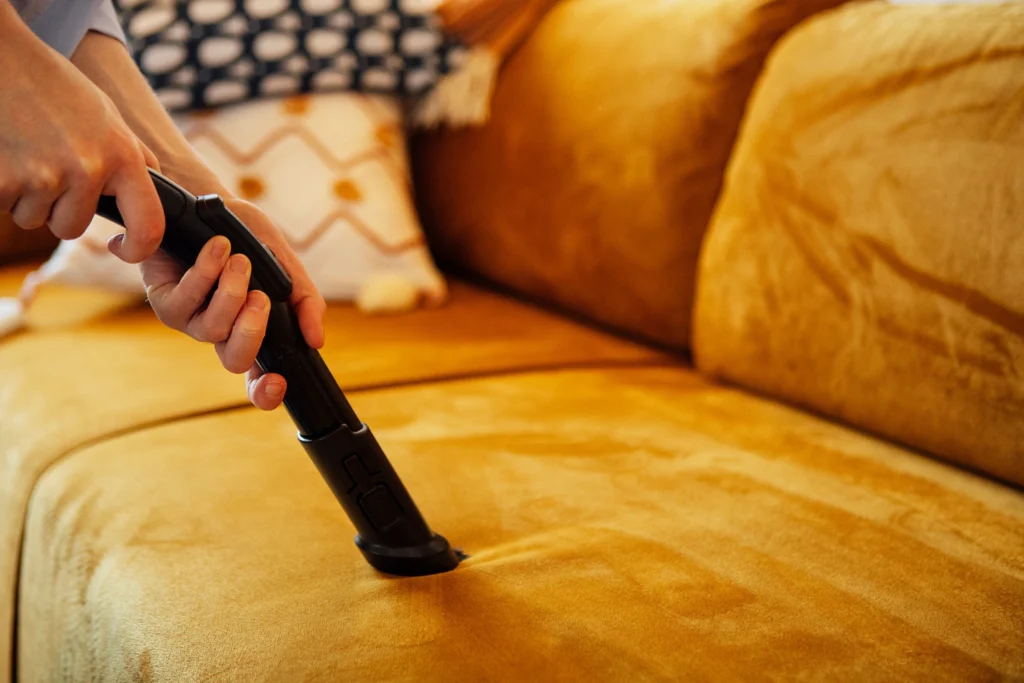
Start with a vacuum cleaner fitted with a suitable upholstery or soft brush attachment, working gently across the seats, backrest and arms. Pay particular attention to seams, spaces between cushions and regularly used seating areas, as these are where crumbs, dust and pet hair tend to collect.
If the cushions are removable, lift them to clean underneath and check the surrounding edges. Avoid pressing the attachment firmly into the material or brushing aggressively, especially on delicate fabrics that could be damaged by too much friction.
Check marks before using cleaning products
Once the loose dirt has been removed, inspect the upholstery for any noticeable spots or stains. A fresh drink spill, for example, may need a different approach from an older grease mark, while the fabric itself will influence which products can safely be used.
Even products labelled as upholstery cleaners aren’t necessarily suitable for every material, so always follow the care instructions and test a hidden area first. It’s also worth avoiding household mixtures involving vinegar, baking soda or dishwashing liquid unless their suitability has been confirmed, as the wrong product can make an existing stain more difficult to treat.
Blot fresh spills rather than scrubbing
When something spills on your sofa, acting promptly can help limit how far it spreads. Remove any solid material carefully, then use a clean white cloth to blot up excess liquid without rubbing it further into the upholstery.
Avoid scrubbing, applying heat or repeatedly soaking the area with water, as too much moisture can reach the cushioning beneath while vigorous rubbing may spread the stain or affect the fabric’s texture.
If a mark remains after the initial clean-up, resist the temptation to try several different products. Many stains can be improved with professional treatment, although the result depends on the fabric, what caused the stain and whether it has been treated previously.
Allow the sofa to dry properly
If you’ve used moisture as part of an approved cleaning method, allow the treated area to dry thoroughly before using the sofa again. Improving airflow can help, although drying times vary depending on the fabric, cushioning, humidity and amount of moisture involved.
Avoid replacing removable cushions while they’re still damp, as moisture can remain beneath the surface even when the outer fabric starts to feel dry.
Can You Steam Clean Upholstery Yourself?
Hiring an upholstery cleaning machine or using a handheld steamer might seem convenient, but not every sofa is suitable for water-based treatment. Some fabrics can be cleaned using controlled water extraction, while others require low-moisture or solvent-based methods.
Household steamers also work differently from professional upholstery extraction equipment, so it’s important not to assume a machine described as a steam cleaner will suit your furniture.
If you have a delicate, expensive or unfamiliar sofa, having it assessed before attempting a deeper clean can help prevent unnecessary damage.
How Should Leather And Delicate Upholstery Be Handled?
Leather lounges have different cleaning requirements from fabric sofas, and the same DIY methods shouldn’t automatically be used on both. Leather finishes can react differently to moisture and cleaning products, while delicate fabrics may be particularly sensitive to rubbing or excess water.
For these materials, follow the manufacturer’s guidance rather than experimenting with general household cleaners. If you’re uncertain about the material or its care requirements, professional advice is a sensible starting point.
What Should You Do About Common Sofa Stains And Odours?
Not every sofa problem follows an obvious spill. Frequently used seating areas can gradually develop marks from body oils, food and drinks, while pet hair and crumbs collect around cushions and seams.
Regular vacuuming helps with loose debris, but older stains and lingering odours can be more difficult to manage. An unpleasant smell might come from something on the fabric’s surface or residue that has reached the cushioning underneath, which means covering it with fragrance won’t necessarily address the cause.
If you’re considering upholstery cleaning in Bankstown after a spill or persistent odour, it’s useful to explain what caused the problem and which cleaning products you’ve already tried. This information can help determine whether professional treatment is likely to improve the situation.
How Can You Keep Upholstery Fresher Between Deeper Cleans?
Keeping your sofa presentable is largely about regular maintenance rather than waiting until it looks noticeably dirty. Vacuuming around cushions and seams, checking for small marks and responding promptly to spills can all help prevent everyday problems from becoming harder to manage.
Busy family lounges generally need more attention than furniture in rarely used rooms, particularly where children and pets regularly use the same seating areas.
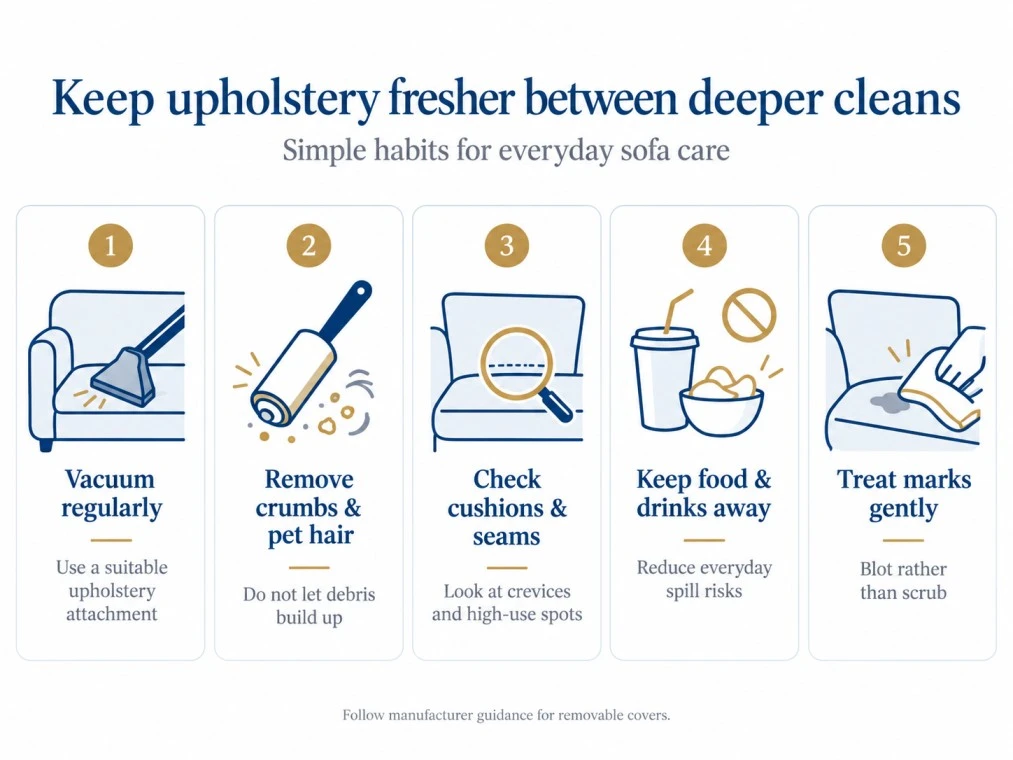
Fabric protection may also be worth considering for some upholstery. Depending on the product and fabric, it can slow the absorption of liquids and provide more time to respond to a spill, although it won’t make the furniture stain-proof.
How often should you clean your upholstery?
There isn’t a fixed cleaning schedule that suits every household because the amount of maintenance needed depends on how frequently the furniture is used, whether you have children or pets, and the type and condition of the fabric.
A sofa used daily will generally require more attention than one in a rarely used sitting room, so it’s better to monitor its condition than follow an arbitrary timetable.
For homeowners weighing up upholstery cleaning in Blacktown, the sofa’s current condition and everyday use are useful considerations when deciding whether routine care is enough or a deeper clean is worthwhile.
When Should You Call A Professional Upholstery Cleaner?
Although regular maintenance helps keep a sofa in good condition, there are times when professional cleaning is the more practical option. Set-in stains, persistent odours, delicate fabrics and large areas requiring treatment can all be difficult to manage at home, particularly when previous DIY attempts haven’t helped.
Rather than continuing to experiment, professional upholstery cleaning in Sydney should begin with assessing the material, its condition and the problem being treated. This helps determine whether controlled water extraction or another method is suitable for the upholstery.
If you’re arranging upholstery cleaning in Campbelltown, mentioning any previous stain treatments when requesting an assessment is worthwhile, as certain products or methods can affect what cleaning options remain available.
It’s important to remember that professional cleaning doesn’t guarantee every stain or odour can be removed. Results depend on the material, the age of the mark and whether previous treatments have affected the fabric.
Book A Spring Sofa Refresh
Giving your sofa some attention during spring cleaning can help keep it looking presentable throughout the year, and in many cases, regular vacuuming and careful treatment of fresh spills are all that’s needed between deeper cleans.
When marks become difficult to manage, odours persist or you’re unsure how to clean a particular fabric, Kings of Cleaning can assess the upholstery and recommend an approach based on its material and condition.
If you’re planning a spring refresh or your sofa needs more than routine maintenance, get a free quote from Kings of Cleaning to discuss your upholstery and the cleaning it may need.