Fabric sofa stains are easier to lift when treated promptly, but professional cleaning can also improve many set-in marks caused by wine, food, ink, oil and pet accidents. A fabric sofa stain cleaning service on the Northern Beaches uses fibre-specific solutions and an appropriate extraction method to treat the stain at depth while reducing the risk of shrinkage, fading or fabric damage.
Daily life leaves its mark on couches across the Northern Beaches. From sandy feet in Manly and Mona Vale to coffee spills in Dee Why apartments and pet accidents in family homes around Avalon and Frenchs Forest, fabric lounges absorb far more than most people realise. While supermarket sprays can sometimes lighten a fresh mark, deeper stains usually settle into the upholstery fibres underneath the surface.
Combined with our upholstery cleaning service, targeted stain treatment can improve everyday marks while refreshing the feel and appearance of heavily used couches.
The Most Common Sofa Stains in Northern Beaches Homes
Beachside homes may expose lounges to more sand, sunscreen, salt residue and humidity than properties further inland. These everyday contaminants can settle into upholstery and make spills and odours more noticeable over time.
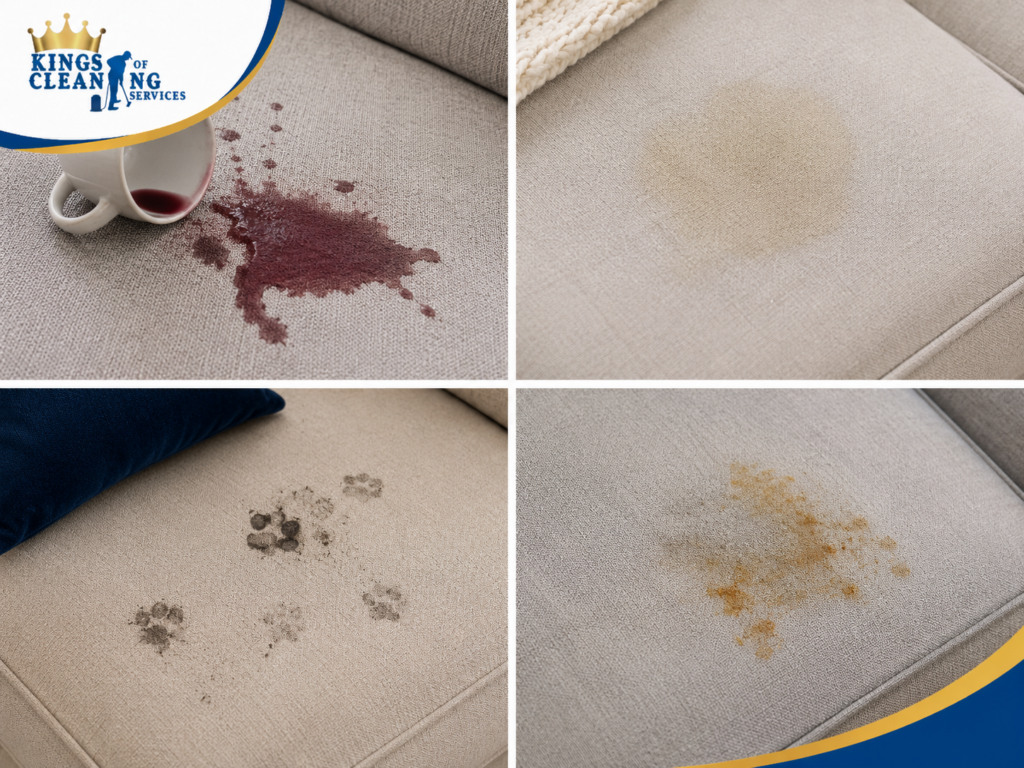
Some of the most common stains seen during couch-cleaning appointments on the Northern Beaches include:
- Red wine and coffee stains.
- Food grease and takeaway oil marks.
- Ink and texta stains.
- Pet urine and muddy paw prints.
- Sunscreen and tanning lotion residue.
- Sweat and body oil build-up.
- Salt and sand transferred from towels and swimwear.
These stains behave differently in upholstery. Tannin stains such as wine and coffee can bind quickly to fibres, while oil-based marks may spread beneath the surface and moisture-heavy spills can leave water rings as they dry.
That is why fabric sofa cleaning requires more than one universal product. The treatment must suit both the stain and the fabric.
Why Stains Set Faster Than You Think
Upholstery can absorb liquid quickly, especially natural-fibre blends such as cotton, wool and linen. A mark that looks minor on the surface may already have reached deeper fibres or cushioning.
The first hour after a spill is usually the best window for reducing permanent staining. Heat and sunlight can cause some stains to set more quickly, while high humidity may slow drying and keep moisture within the upholstery for longer.
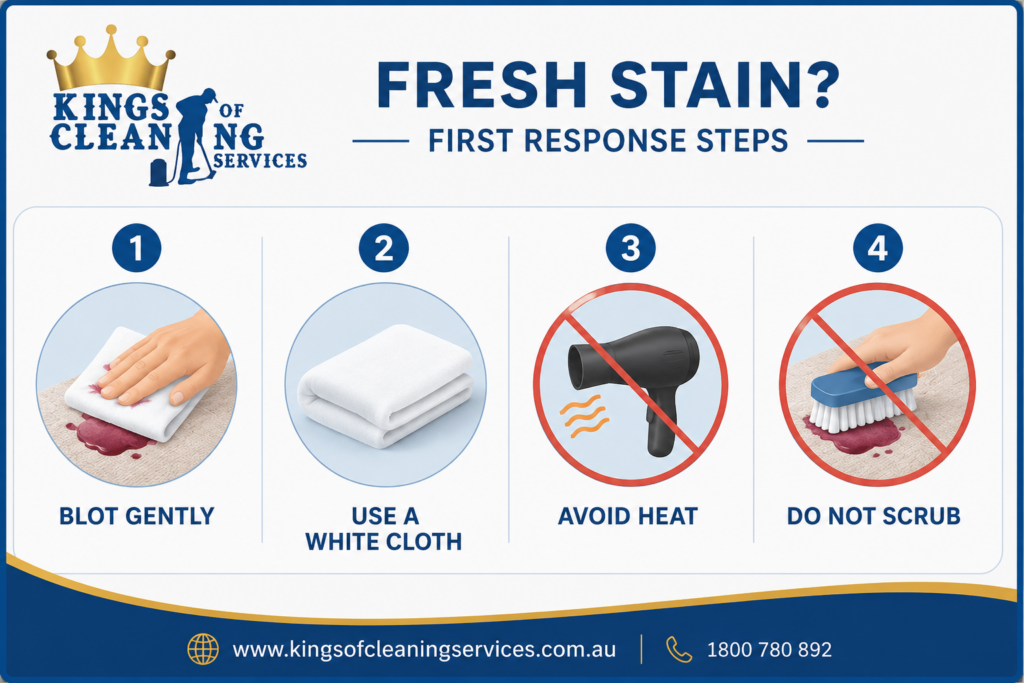
If a spill happens, the safest immediate response is to:
- Blot gently with a clean white cloth.
- Use cold water only unless advised otherwise.
- Avoid scrubbing aggressively.
- Keep harsh chemicals away from the fabric.
- Prevent oversaturating the upholstery.
What’s the Best Way to Remove a Stain From a Fabric Sofa?
For a fresh spill, blot gently with a clean white cloth and follow the couch manufacturer’s care instructions. Avoid heat, vigorous scrubbing and household mixtures unless you know they are suitable for the fabric.
Professional treatment becomes more important when:
- The stain has dried repeatedly.
- Oils or pet accidents have soaked beneath the surface.
- Water rings remain after DIY cleaning.
- The fabric is delicate or colour-sensitive.
- Previous cleaning products have left residue behind.
Some supermarket upholstery sprays contain bleaching agents or detergents that are unsuitable for lounge fabrics. A professional can identify the fibre and stain type before choosing a treatment, reducing the risk of fading, shrinkage or distortion.
Fabric Sofa Stain Cleaning Services in Northern Beaches: How It Works
Professional stain treatment aims to improve the mark without sacrificing the couch fabric. The process should begin with fabric inspection and testing before any solution is applied.
For homeowners needing a full upholstery refresh alongside stain treatment, Kings of Cleaning also provides upholstery cleaning in the Northern Beaches for broader fabric maintenance and deep cleaning.
Fabric Inspection and Colour Test
Every upholstery fabric responds differently to moisture and cleaning products. Before treatment, technicians inspect the fibre blend, fabric condition, care instructions and dye stability.
Colour-fast testing helps identify whether the fabric may bleed, fade or shrink during cleaning. This step is particularly important for darker fabrics, delicate linen blends and older lounges.
They also identify whether the stain is oil-based, protein-based or water-based before selecting a fibre-specific solution.
Spot Pre-Treatment
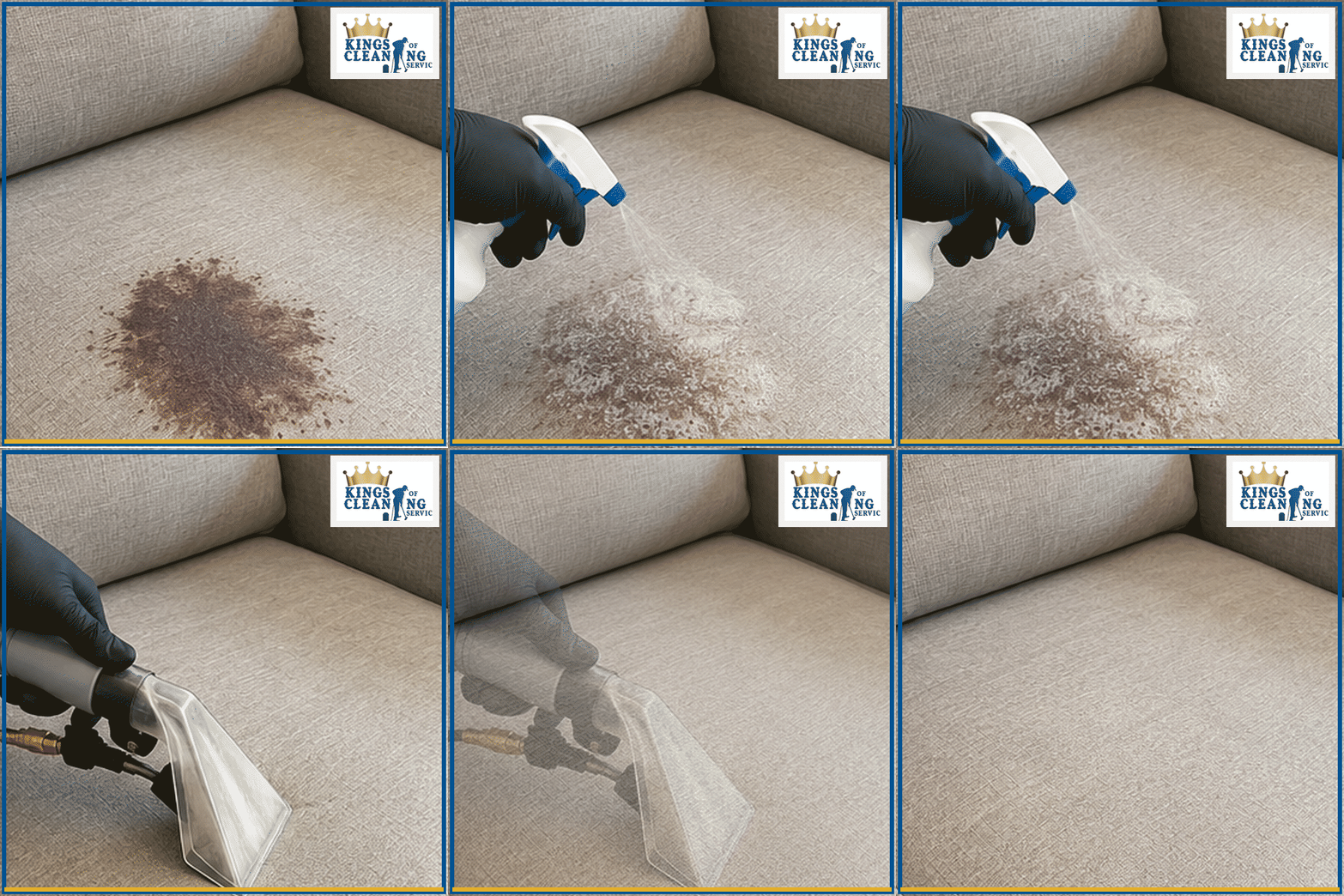
After assessment, the stain is treated with a targeted pre-treatment designed to loosen oils, food residue, tannins or other particles trapped within the fibres.
The product and dwell time are chosen according to the stain type and upholstery fabric.
Where appropriate, family- and pet-friendly products can be used to minimise harsh chemical residue in the home.
Hot Water Extraction
Where the upholstery is suitable for water-based cleaning, controlled hot water extraction can help remove loosened soil and stain residue from within the fabric.
Technicians should first check the fibre type, care instructions and colour stability, as some lounges require solvent-based or low-moisture cleaning methods instead.
Drying and Fabric Protection
After extraction, airflow equipment may be used to speed up drying times. Most fabric lounges dry within several hours, depending on airflow, humidity and fabric thickness.
Protective treatments may also be applied afterwards to slow future stain absorption. While fabric protection does not make upholstery stain-proof, it can provide more time to respond before spills settle deeply into the fibres.
Fabric and leather require different care. Kings of Cleaning’s leather lounge cleaning uses products and methods designed for coated leather rather than upholstery fibres.
What to Do When a Stain Has Just Happened
For a fresh spill:
- Blot carefully instead of rubbing.
- Remove solids gently using a spoon or blunt edge.
- Avoid coloured towels that may transfer dye.
- Keep heat away from the stain.
- Test any cleaning product on a hidden section first.
Many household stain removers are designed for carpets or hard surfaces rather than upholstery. On a couch, the wrong product can leave sticky detergent residue, bleach marks or water rings.
For stains that continue to spread or reappear after drying, professional treatment is generally the safer option.
Request a free quote if a recent spill has started to soak into the couch fabric or the cushioning underneath.
Stains That Are Harder to Remove (and Why)
Older stains can oxidise as they dry, causing yellowing or darkening around the affected area. Oil-based stains may also spread beneath the fabric surface and create a larger mark than was originally visible.
The stains that tend to be more challenging include:
- Old wine stains.
- Ink and dye transfer.
- Grease and cooking oil.
- Pet urine left untreated.
- Bleach damage.
- Water staining from DIY cleaning attempts.
Professional treatment can still significantly improve many of these problems, although complete removal is not always possible.
That is why reputable cleaners avoid guaranteeing full stain removal. Honest assessment helps protect the fabric while setting realistic expectations.
What Removes Set-In Stains From Upholstery?
Set-in stains usually require more than surface wiping, as the residue can sit deep within the upholstery fibres and cushioning.
Professional treatment often combines:
- Fibre-specific stain solutions.
- Controlled agitation.
- Hot water extraction, where suitable.
- Odour-neutralising treatment.
- Moisture-controlled drying.
This layered process helps loosen embedded contaminants while reducing the risk of damage to the upholstery itself.
Residue from previous DIY products can complicate stain removal and may need to be rinsed or neutralised before further treatment.
Why Scrubbing Makes It Worse
Aggressive rubbing can push a stain deeper into the upholstery while roughening the surface fibres. On delicate materials, this may cause pilling, faded patches or fraying.
It can also spread oil-based stains beneath the surface, creating a larger ring.
Professional cleaners rely on controlled extraction and fibre-safe treatment methods instead of excessive force.
Can You Clean a Fabric Sofa Without Damaging It?
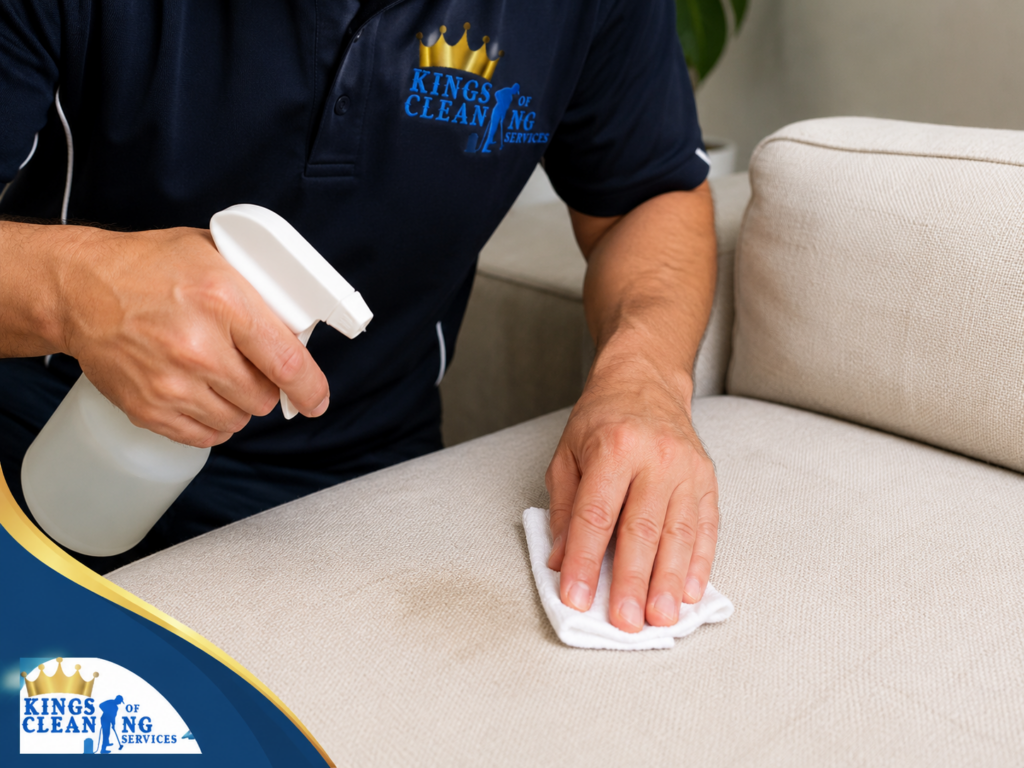
Yes, when the method suits the upholstery. Wool, linen, cotton blends and synthetic fibres respond differently to heat, moisture and cleaning solutions, so fabric inspection and colour-fast testing are essential.
A professional cleaner should protect the fabric’s texture, colour and structure rather than chase a perfect-looking result at the expense of the upholstery.
Moisture control is equally important. Oversaturating the fabric can cause mildew odours, shrinkage and prolonged drying issues, particularly in humid coastal homes.
How Long Does Sofa Cleaning Take?
Most sofa cleaning appointments take between one and three hours, depending on:
- Couch size
- Number of cushions
- Fabric thickness
- Stain severity
- Drying conditions
Larger lounges or heavily stained upholstery may require extra treatment time. Drying usually takes several more hours and may be slower in humid homes close to the beach.
Book a Fabric Sofa Clean in the Northern Beaches
Fabric lounges collect more than visible marks. Salt residue, body oils, food particles and moisture can gradually settle into the upholstery, particularly in busy Northern Beaches homes.
Professional treatment can improve most everyday marks while helping protect the fabric from unnecessary wear. Whether the problem is a fresh spill or built-up staining, the focus should be on treating the upholstery safely rather than masking the mark.
Kings of Cleaning provides a professional cleaning service in the Northern Beaches for households wanting practical stain treatment and upholstery care suited to coastal living conditions.
You can also see our recent upholstery work to view professionally cleaned lounges and fabric upholstery across Sydney’s Northern Beaches.