
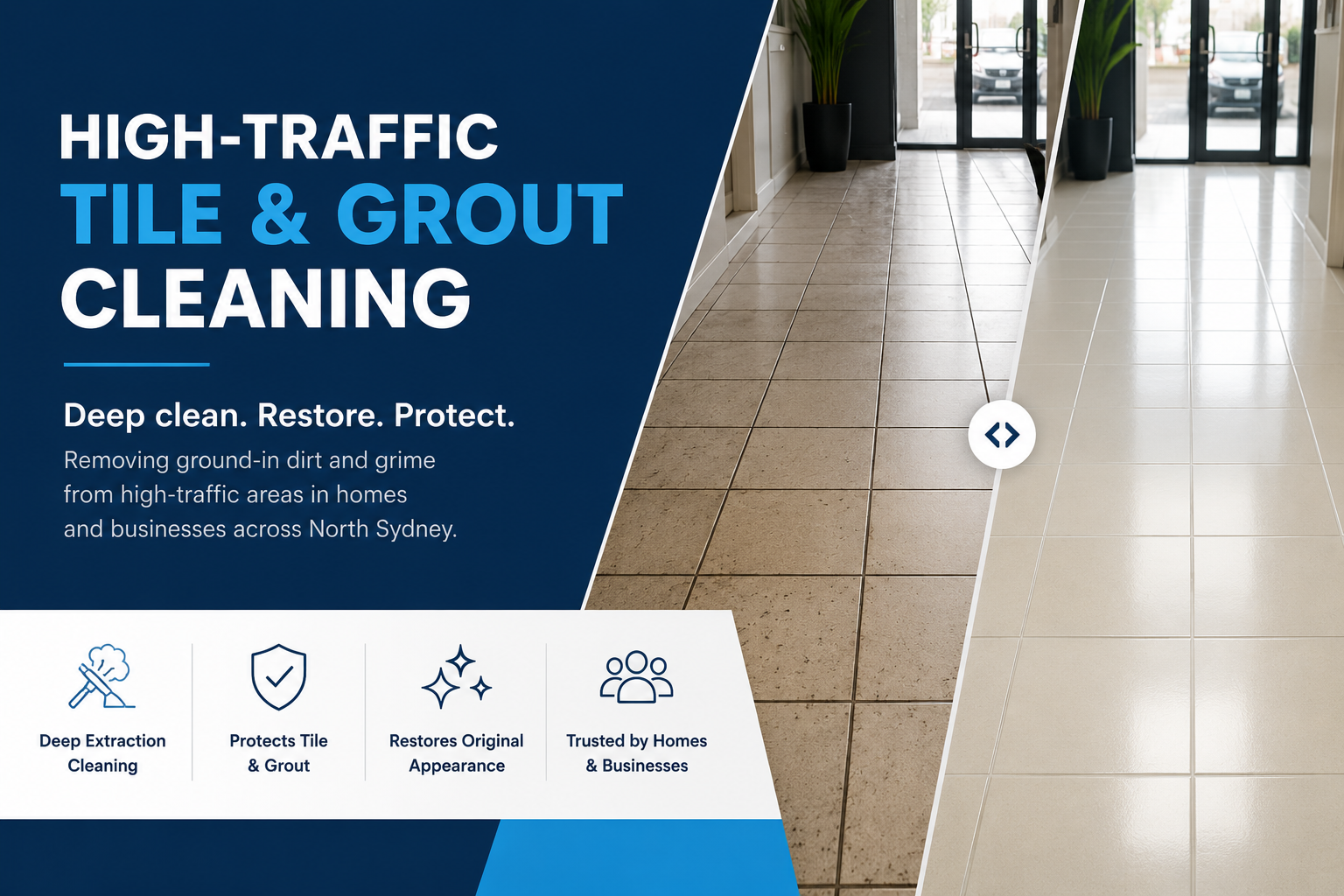
High-traffic tile and grout cleaning in North Sydney targets the wear zones where dirt grinds into grout lines, dulling the tile surface. Professional steam extraction lifts ground-in soil from porous grout and restores the tile finish in commercial lobbies, hallways, kitchens and bathrooms without aggressive scrubbing that can damage sealants or wear down the tile surface over time.
Heavy foot traffic changes the way tile floors wear. In North Sydney CBD apartments, office kitchens, retail entrances and shared residential corridors, dirt and grit are repeatedly pushed deeper into grout lines every day. Even regular mopping often leaves behind residue that settles into porous grout rather than removing it completely. That is why many homes and businesses arrange our tile and grout cleaning service when the tile begins looking dull despite regular maintenance.
Properties across Crows Nest, McMahons Point and Lavender Bay commonly experience traffic-lane discolouration in entrances, kitchens and walkways where foot movement is concentrated. Instead of treating the entire floor the same way, high-traffic cleaning focuses specifically on the areas that wear down fastest.
Why Does High-Traffic Tile Dull Faster Than Expected?
Tile is durable, but grout absorbs much more contamination than most people realise. Grout is porous, meaning it collects moisture, oils, soil and detergent residue over time. In busy areas, those particles are repeatedly compacted into the grout with every step.
The problem becomes more noticeable in traffic lanes. Hallways, apartment entrances, and office walkways gradually develop darker grout because they experience the highest soil load. Small abrasive particles tracked in from outdoors also slowly wear away sealants, leaving the tile looking flat and uneven, even after mopping.
Porcelain and ceramic tile are both hard-wearing surfaces, but neither is immune to long-term traffic build-up. Once grime settles into the pores of textured tile and grout, standard household products usually cannot remove it completely.
What Happens to Grout in Busy Areas?
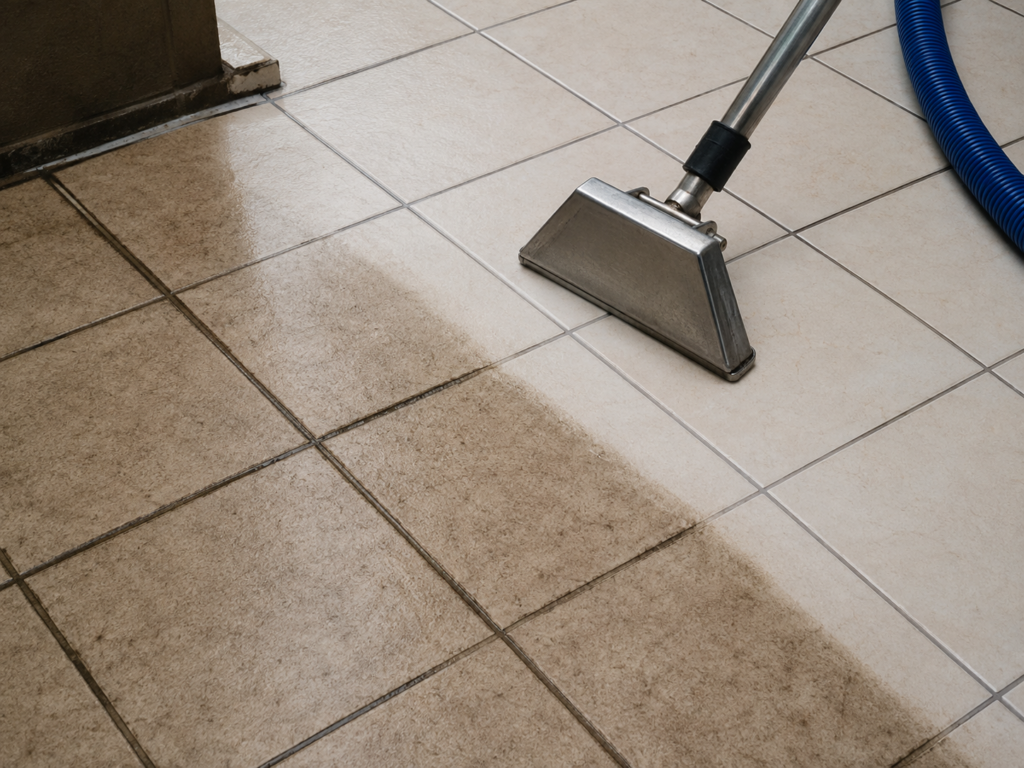
Grout usually shows wear before the tile surface itself. In high-traffic environments, grout darkens because it absorbs contaminated mop water, grease, dirt and moisture over time.
One of the biggest causes is traditional mopping. A single bucket of water often redistributes dirty water across the floor instead of extracting it. As the water dries, fine soil particles settle deeper into grout lines again and again. This is why grout can continue looking darker despite frequent cleaning.
Commercial environments experience this faster than most homes. Office kitchens, café floors, retail entrances and shared building corridors in North Sydney deal with constant foot traffic throughout the day. Restaurant floors also absorb grease and moisture, which gradually weakens sealants.
Residential homes experience a different pattern. Kitchens, bathroom entrances and apartment hallways often develop narrow traffic lanes where the grout becomes visibly darker than the surrounding areas.
In many cases, grout can be significantly restored without replacement. Deep extraction cleaning removes embedded soil from grout pores, improving colour consistency without removing the grout itself.
How Is High-Traffic Tile and Grout Cleaning in North Sydney Done?
Professional extraction cleaning focuses on removing embedded soil while protecting the tile surface and the integrity of the grout. The process used for tile and grout cleaning in North Sydney targets high-traffic areas rather than treating the floor like a standard surface clean.
Tile and Sealant Inspection
The tile material, grout condition and existing sealant are assessed first. This helps determine the safest pressure and cleaning method for ceramic tile, porcelain tile and heavily worn grout lines.
Alkaline Pre-Treatment
An alkaline pre-treatment breaks down compacted oils, grime and residue trapped inside porous grout. This step is especially important in kitchens, commercial entrances and shared corridors with heavier soil load.
High-Pressure Steam Extraction
Steam extraction uses controlled pressure and suction to flush dirt from grout lines while lifting residue from the tile surface. Instead of spreading contamination across the floor, the extraction process removes it immediately through vacuum recovery.
Businesses booking commercial cleaning across Sydney often schedule tile cleaning after hours to avoid disrupting staff, customers and building access.
Optional Grout Sealing
After cleaning, grout sealing helps reduce future moisture absorption and slows down staining. In many residential properties, sealing helps maintain results for around 12 to 18 months before another deep clean is required.
Where Does Tile Wear Hit Hardest in Homes and Businesses?
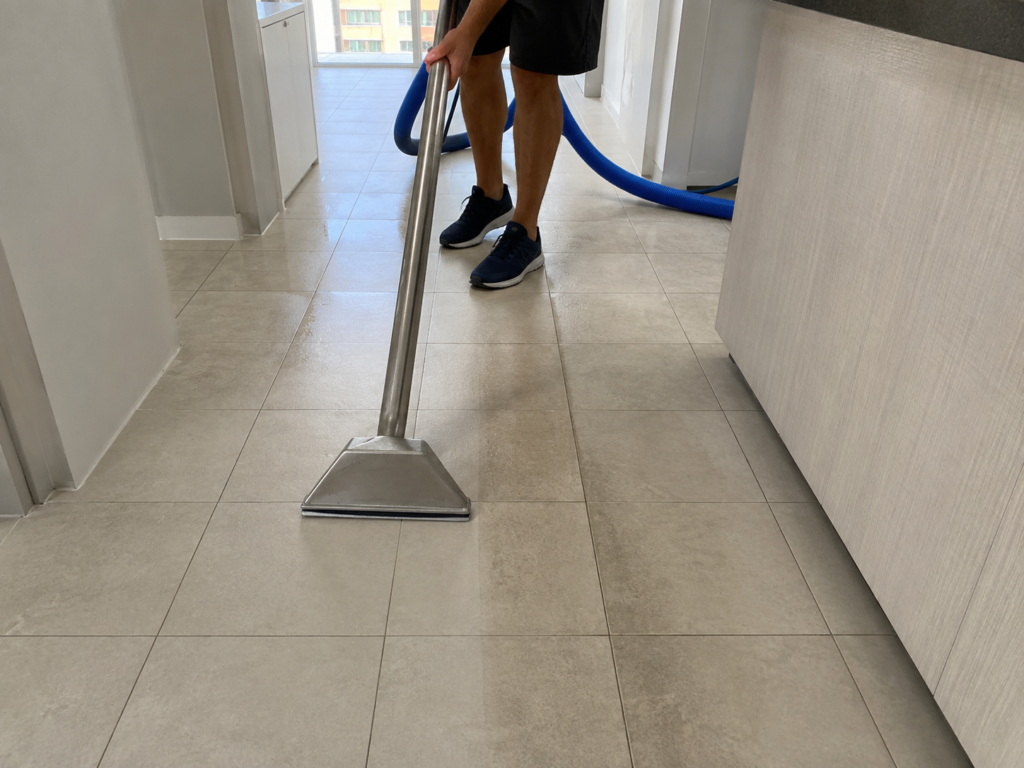
Residential and commercial floors experience very different wear patterns, which is why cleaning frequency also differs.
In homes, the heaviest wear usually appears in kitchen walkways, apartment entrances, and bathroom access points, where people take the same path every day. Families with children or pets often notice darker grout developing near entryways first.
Commercial environments experience broader and more constant wear. Office lobbies, reception areas, retail entrances and restaurant kitchens deal with continuous foot traffic, outdoor debris and moisture throughout the day. Shared strata corridors also experience consistent wear because multiple residents use the same tiled pathways.
For homeowners preparing for property inspections or sale campaigns, deep grout cleaning can noticeably improve the presentation of kitchens, bathrooms and entranceways without major renovation work.
If your property includes mixed hard flooring surfaces, services such as vinyl floor cleaning may also help maintain a more consistent appearance across commercial or shared areas.
For residential properties where kitchen or hallway grout has become visibly darker, periodic professional extraction cleaning is usually more effective than repeated scrubbing with supermarket products.
Why Do Mops Spread Dirt Instead of Removing It?
Mopping removes loose surface debris, but it does not fully extract contamination from porous grout.
As mop water becomes dirty, soil particles are repeatedly spread across the floor. Much of that residue settles into grout lines as the water dries. Over time, detergent residue, oils and dirt combine to create darker traffic lanes that standard cleaning cannot easily reverse.
Steam extraction works differently because it removes suspended dirt immediately through vacuum recovery. Instead of pushing moisture deeper into grout pores, the process lifts contamination out of the surface.
This is one reason professionally extracted tile often stays cleaner longer compared with floors maintained only through standard mopping.
According to the Tile Association Australia, proper maintenance methods play an important role in preserving grout condition and reducing long-term wear on tiled surfaces.
How Often Should Tile Be Professionally Cleaned?
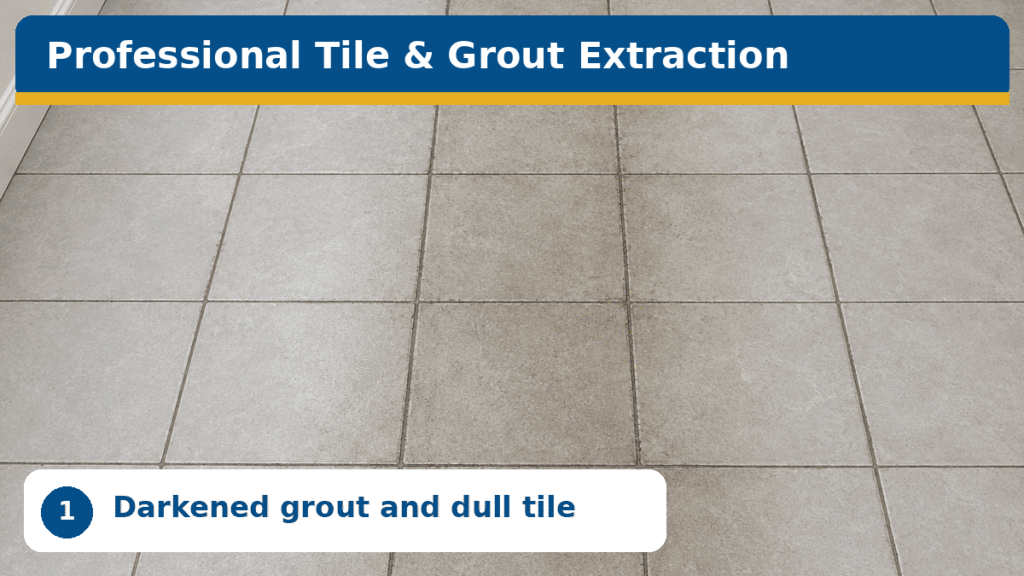
The right cleaning schedule depends on foot traffic, soil exposure and the type of property.
Residential high-traffic areas generally benefit from professional cleaning every 12 to 18 months. Homes with children, pets or lighter grout colours may require more regular maintenance.
Commercial spaces usually require more frequent cleaning. Office kitchens, building lobbies, restaurant entrances, and retail floors often benefit from deep cleaning every 3 to 6 months,, depending on daily footfall.
Waiting until grout becomes heavily discoloured often makes restoration more difficult. Scheduled maintenance helps prevent dirt from settling deeper into grout and reduces long-term wear on sealants.
Can Grout Be Restored Without Replacing It?
In many situations, yes. Professional extraction cleaning can significantly improve the appearance of grout without removing or replacing it.
The final result depends on factors such as age, staining depth and previous chemical damage. Very old grout may not return to its original colour, but deep cleaning can still create a noticeably brighter and more even finish.
Replacement is usually only necessary when grout is cracked, loose or structurally damaged.
Book a Tile and Grout Clean in North Sydney
High-traffic tile floors require more than routine mopping. Entrances, hallways, kitchens, office lobbies and shared corridors collect far more soil and abrasive debris than lower-use areas, which is why grout darkens, and traffic lanes develop over time.
Whether you manage a commercial property, maintain a strata building or want to improve worn residential tile, a professional cleaning service in North Sydney can help remove deep soil build-up while protecting the tile surface and grout.
For commercial sites, after-hours cleaning helps maintain presentation standards without interrupting business operations. For homes, periodic deep extraction cleaning can improve the appearance of kitchens, bathrooms and entryways without aggressive scrubbing or unnecessary grout replacement.
To arrange an inspection or discuss traffic-related grout issues, you can also contact us for a tile quote.